Long-term survival & heart-failure recovery
Registry studies in diagnosed TGCV patients reported durable recovery markers and long-term survival in tricaprin-treated patients.
Nature Cardiovascular Research →Pure Tricaprin C10
Most MCT oils are blends containing varying amounts of medium-chain triglycerides — usually mostly C8, with smaller amounts of C10 and C12. Tricaprin is different: it is the specific C10 triglyceride being studied for cardiovascular metabolism and how cells handle stored lipids.
“Remarkable long-term survival and durable recovery of heart failure”
In diagnosed TGCV [a rare fat-storage disease of the heart and blood vessels that can lead to heart failure] patients, supplemental tricaprin was linked with long-term survival and heart-failure recovery signals — a clear human reason C10 is getting attention in heart-metabolism research.
Read the Nature study ↗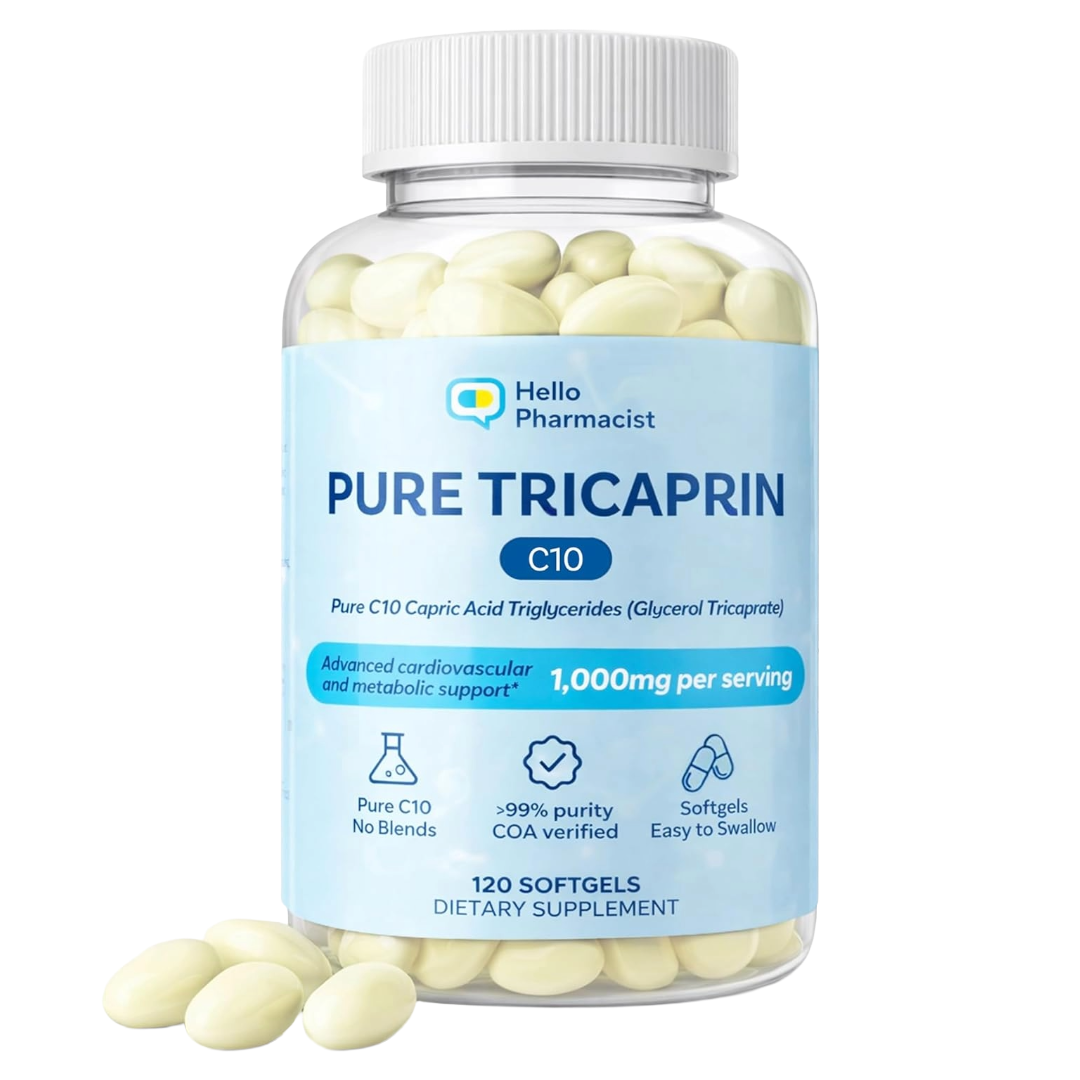
Brought to you by HelloPharmacist, this is not another generic MCT oil blend dressed up with a C10 mention. It is 100% pure Tricaprin C10 — a bigger, cleaner spotlight on the C10 supplement details that matter: 120 softgels, 1 gram per serving, fast absorption, and only four ingredients.
Pure C10. Zero blend noise. HelloPharmacist 100% Pure Tricaprin puts the spotlight where it belongs: on the exact C10 triglyceride people are reading about in heart-metabolism research — not C8-heavy formulas, coconut-oil confusion, or vague “proprietary” MCT positioning.
Want to know why C10 Tricaprin is so special? Keep reading — the next sections break down the science, the MCT comparison, and what makes pure C10 different.
MCT means medium-chain triglycerides — a family of fats that includes C8, C10, and C12. Most “MCT oil” is built around fast-burning C8. Tricaprin C10 is different: it is the isolated C10 triglyceride studied in cardiovascular lipid-handling research, where purity matters because mixed oils can dilute C10 and compete for metabolism.
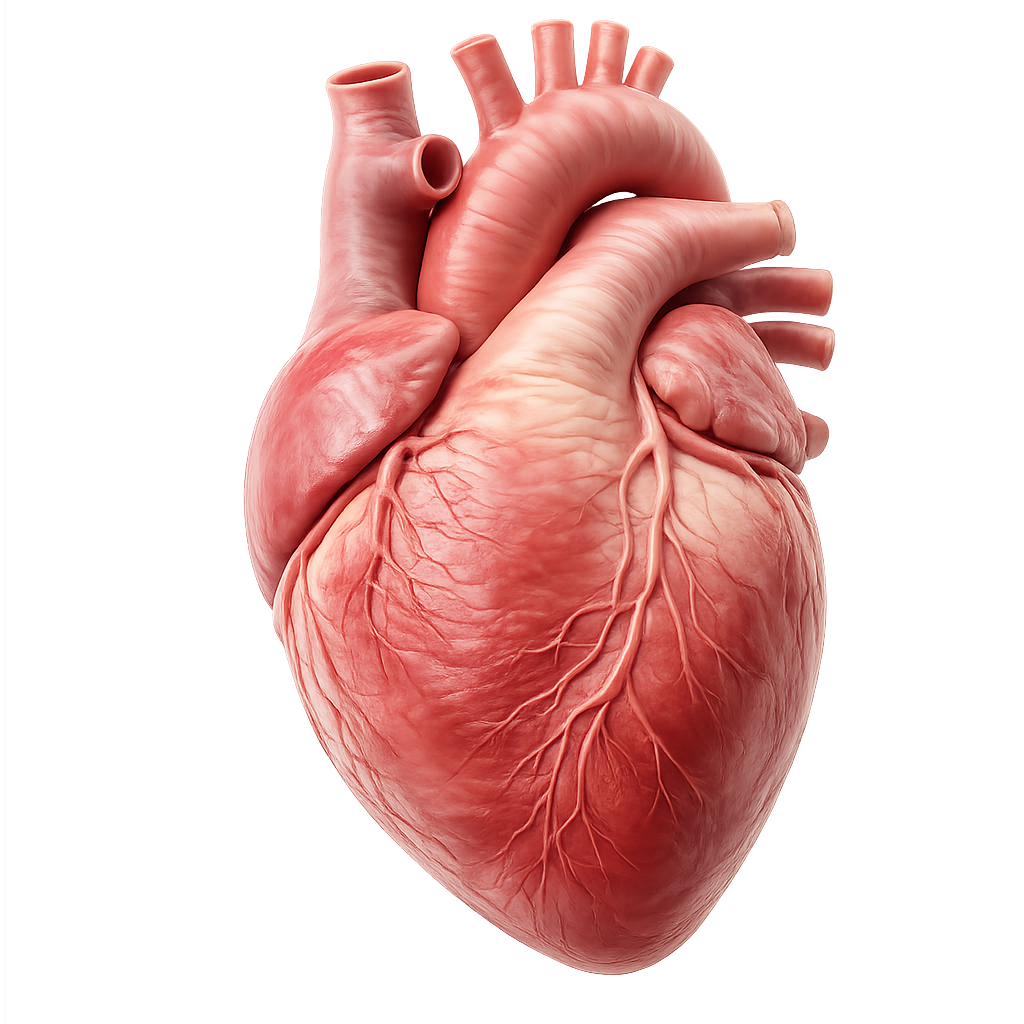
Bulky fats — especially longer-chain fats like C12 and traditional dietary fats — rely more heavily on transporter systems before they can be used inside mitochondria. Pure C10 is different because it is less dependent on that bottleneck, which is one reason it stands out in cardiovascular metabolism research.
Pure C10 acts as a metabolic key that triggers myocardial lipolysis. It effectively reactivates your heart tissue, forcing it to break down and burn off accumulating cellular fat.
This is the science catching global attention. In published medical case reports (TGCV), dietary Tricaprin was directly linked to the visible regression of plaque buildup inside coronary arteries.
It’s about metabolic competition. In generic MCT oils, fast-burning C8 hogs your body's attention and drowns out the C10. To effectively reach your cardiovascular system, Tricaprin must be taken in 100% pure isolation.
Tricaprin C10 is not regular MCT oil. The cardiovascular research centers on isolated, pure C10 — not C8-heavy blends, coconut oil, or “MCT” in name only. True Tricaprin C10 supplements are rare, so check the label and choose the exact ingredient studied.
Tricaprin C10 refers to a specific molecule, not a generic MCT category. Many MCT products are C8-forward blends with only some C10 included. The cardiovascular research attention is focused on isolated C10 — which is why purity, labeling, and documentation matter.
Most MCT oil means a mix of medium-chain triglycerides — commonly C8 first, with C10 often far behind. Tricaprin strips away the blend and makes 100% pure C10 the main event: the specific triglyceride studied for myocardial lipolysis, coronary lipid handling, and TGCV-focused cardiovascular outcomes.
C8, C10, and C12 are all medium-chain triglycerides, but they do not tell the same story in the body or in the research.
Many MCT oils are designed around fast-burning C8, so the C10 may be small, variable, or buried behind the “MCT” label.
Even if a mixed product adds C10, the other MCTs still compete for attention and metabolism. Purity keeps the formula focused on C10.
The published TGCV cardiovascular research centers on tricaprin/C10 — not generic coconut oil, not C8, and not mixed MCT blends.
Mostly not C10. Natural, variable, and not an isolated tricaprin delivery system.
Often quick-energy focused, with C10 present only as a smaller or inconsistent supporting ingredient.
The exact C10 triglyceride spotlighted in TGCV cardiovascular lipid-handling research.
“MCT oil” can mean very different formulas. The question is not whether a bottle mentions C10 — it is whether C10 is the star or just a trace player competing with faster-burning fats.
This research library records tricaprin/C10 studies for review, separating direct cardiovascular research from TGCV background papers and updating the collection as new published research becomes available.
Human tricaprin research is concentrated in triglyceride deposit cardiomyovasculopathy (TGCV), a rare diagnosed condition where heart and blood-vessel cells accumulate triglycerides because intracellular fat breakdown is impaired. In that setting, tricaprin has shown promising signals for myocardial lipolysis, heart-failure recovery, and coronary lesion regression. Researchers are also exploring how C10-focused lipid metabolism may relate to broader cardiovascular health questions, including heart-failure recovery and the removal of accumulated lipids from heart and artery tissues.
Registry studies in diagnosed TGCV patients reported durable recovery markers and long-term survival in tricaprin-treated patients.
Nature Cardiovascular Research →CNT-01 improved BMIPP washout rate in idiopathic TGCV, supporting improved myocardial lipolysis over 8 weeks.
Read RCT →Two TGCV patients with refractory angina improved after tricaprin, with coronary CT angiography showing lesion regression.
Read EHJ report →Nature Cardiovascular Research
Layman takeaway: In diagnosed TGCV, registry data reported durable heart-failure recovery and long-term survival in patients who received supplemental tricaprin.
Most important human signal so far, but still rare-disease registry evidence—not proof for ordinary coronary disease.
Open source ↗Annals of Nuclear Cardiology
Layman takeaway: In 17 idiopathic TGCV patients, 8 weeks of CNT-01 improved BMIPP washout rate, a marker of myocardial triglyceride breakdown.
Clinical measures did not significantly change during the short 8-week window, so this is mechanism proof more than symptom proof.
Open source ↗European Heart Journal
Layman takeaway: Two TGCV patients with refractory angina had symptom improvement and imaging-reported coronary lesion regression after dietary tricaprin.
Visually compelling, but a two-patient case report—best framed as a signal, not a guarantee.
Open source ↗Endocrinology, Diabetes & Metabolism Case Reports
Layman takeaway: A TGCV case report found myocardial triglyceride content decreased and BMIPP washout improved after 8 weeks of CNT-01.
Helpful because it translates the mechanism into a noninvasive imaging marker in a real patient.
Open source ↗CJC Open
Layman takeaway: A severe young-patient TGCV case used standard care plus tricaprin, highlighting how TGCV can masquerade as hard-to-treat coronary disease.
Important clinically, but treatment was combined with coronary bypass surgery, so effects cannot be assigned to tricaprin alone.
Open source ↗Journal of Oleo Science
Layman takeaway: In an ATGL-deficient TGCV mouse model, tricaprin improved myocardial abnormalities and supported the clinical development path.
Preclinical proof-of-concept; mouse results should not be treated as human outcomes.
Open source ↗Journal of Oleo Science
Layman takeaway: Follow-up mouse proteomics work explored how tricaprin changes heart-protein expression in the TGCV model.
Useful for mechanism, not a clinical efficacy claim.
Open source ↗Biomedicine & Pharmacotherapy
Layman takeaway: In a rat AAA model, C10-TG suppressed aneurysm development and rupture, while C8-TG did not show the same effect.
Vascular—not heart-failure—research, and still preclinical.
Open source ↗CJC Open
Layman takeaway: A first-in-human AAA study protocol is testing oral tricaprin in small abdominal aortic aneurysms.
Protocol only—no efficacy results yet. Included because it is direct cardiovascular tricaprin research.
Open source ↗Analytical Sciences
Layman takeaway: Dog pharmacokinetic work showed dose-dependent capric-acid exposure after oral synthetic tricaprin and rapid clearance within hours.
Not a heart-outcome study; useful background for how C10 appears in circulation after dosing.
Open source ↗JACC: Advances
Layman takeaway: Registry survival work shows why TGCV is treated as a serious rare cardiovascular disorder needing targeted study.
Context study; tricaprin-treated patients were excluded from this survival analysis.
Open source ↗ESC Heart Failure
Layman takeaway: Helps separate primary vs idiopathic TGCV biology and explains why myocardial lipolysis markers matter.
Context for mechanism and patient selection, not direct consumer guidance.
Open source ↗Annals of Nuclear Cardiology
Layman takeaway: Defines the disease framework used in TGCV research, including imaging criteria tied to myocardial fat metabolism.
Important guardrail: these findings apply to diagnosed TGCV, not casual self-diagnosis.
Open source ↗Orphanet Journal of Rare Diseases
Layman takeaway: A broad clinical overview linking myocardial and coronary triglyceride deposition with heart failure and coronary disease.
Best background paper for understanding TGCV before reading treatment studies.
Open source ↗JAMA Network Open
Layman takeaway: Suggests TGCV may be relevant in difficult coronary disease cases, especially recurrent restenosis in diabetes.
Context paper; not a tricaprin treatment trial.
Open source ↗Heart
Layman takeaway: Shows TGCV can be found in high-risk cardiovascular populations such as patients on hemodialysis.
Context paper; useful for prevalence and risk discussion.
Open source ↗European Heart Journal: Acute Cardiovascular Care
Layman takeaway: Looks for TGCV in acute coronary syndrome patients undergoing PCI, helping frame how often it may be missed.
Context paper; included to support the diagnosis-first framing.
Open source ↗European Heart Journal
Layman takeaway: Foundational imaging observation connecting ATGL deficiency, cardiac fat buildup, and abnormal BMIPP washout.
Pre-tricaprin foundation for later BMIPP treatment endpoints.
Open source ↗Biochemical and Biophysical Research Communications
Layman takeaway: Clarifies the genetic/metabolic basis of primary TGCV involving adipose triglyceride lipase dysfunction.
Mechanistic background for why a lipid-handling therapy was pursued.
Open source ↗European Heart Journal
Layman takeaway: Introduced coronary artery triglyceride deposition as a distinct pathology in this TGCV research line.
Foundational context for the later coronary regression case report.
Open source ↗New England Journal of Medicine
Layman takeaway: The original report that named and described TGCV as a distinct cardiomyovascular disease entity.
Disease discovery paper; not a tricaprin study.
Open source ↗You Ask. We Answer.

HelloPharmacist is a North Carolina-based, pharmacist-owned company founded by Dr. Brian Staiger, PharmD. Every HelloPharmacist formula is created with pharmacist oversight, practical clinical judgment, and a commitment to helping people understand exactly what they are taking.
Anchored by Dr. Staiger’s background helping consumers navigate medications, supplements, and evidence-based wellness decisions.
Formulas are developed by a pharmacist — not by a faceless supplement label or generic marketplace brand.
A real pharmacist-owned company with an educational mission and an accessible team behind the product.
Have a question for a licensed pharmacist? Visit HelloPharmacist.com and we’re happy to help.
Visit HelloPharmacist.comDon't settle for diluted MCT blends. Get the focused C10 supplement brought to you by HelloPharmacist.
View 100% Pure Tricaprin on Amazon